
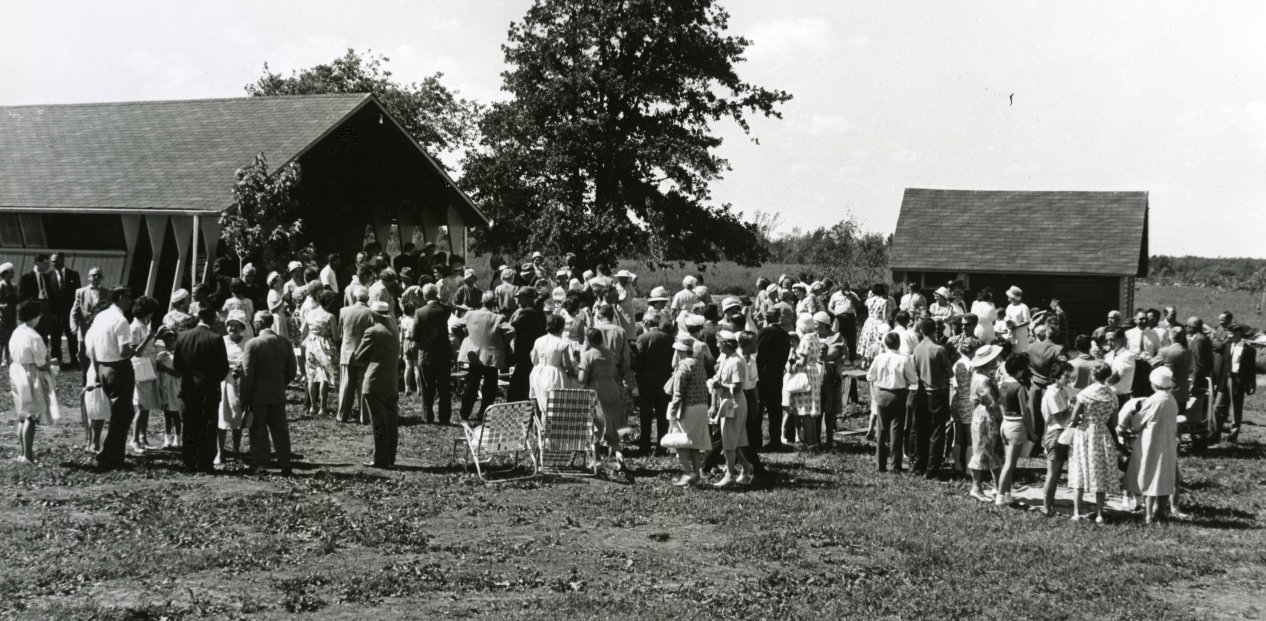
Our History!
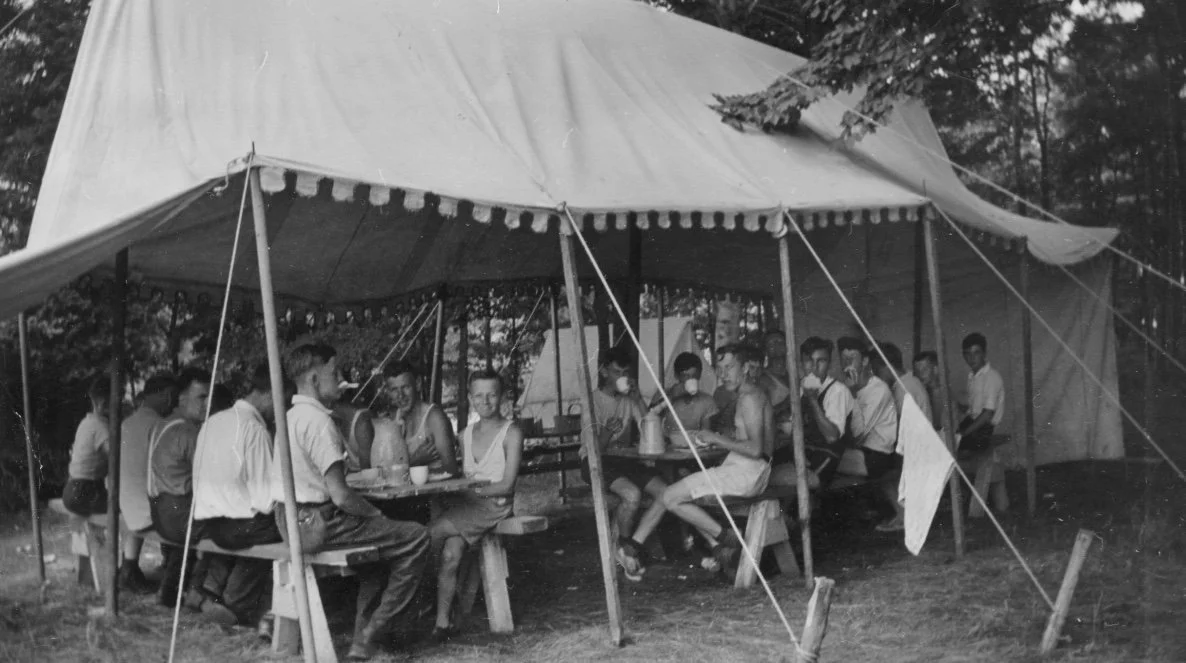
This photo shows the dining area at the very first camp session. It was a boys' camp and they used a marquis with nailed together tables and benches for seating. It was definitely a used marquis because it was missing a good number of panels so not very well protected in inclement weather.
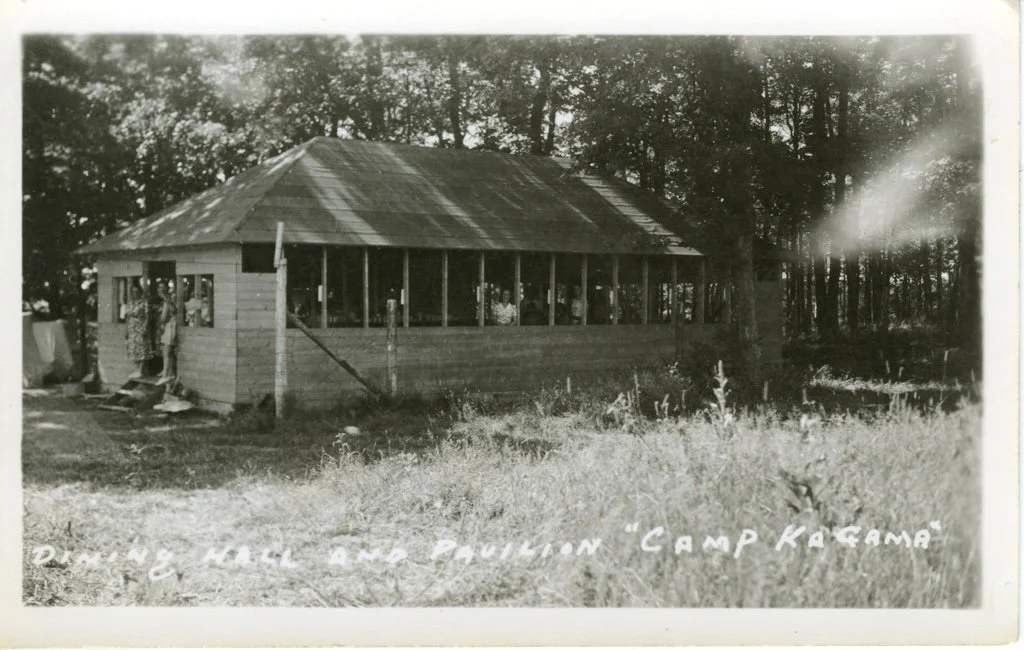
A couple of years later (about 1938), Rev. McLaren talked some local lumber yards to donate wood and commandeered volunteers (mostly relatives) to build the dining hall. It was well ventilated with shutters that lifted up on hot days and lowered to provide a sanctuary in the inclement weather. (Incidentally, they had very strict rules on acceptable behaviour in the dining hall.)
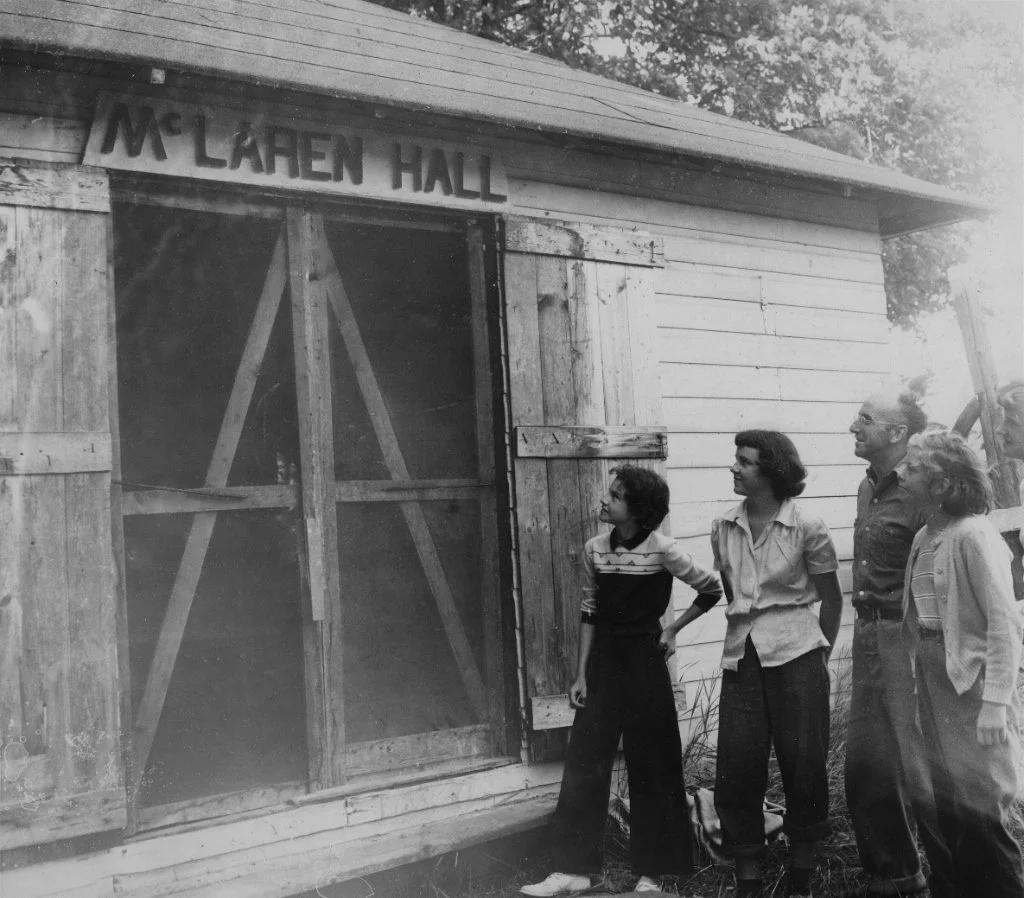
Rev. McLaren died in 1945 and the dining Hall was named in his honour. Incidentally, the balding man in the photo is the father of Birkoff (a member of our Board).
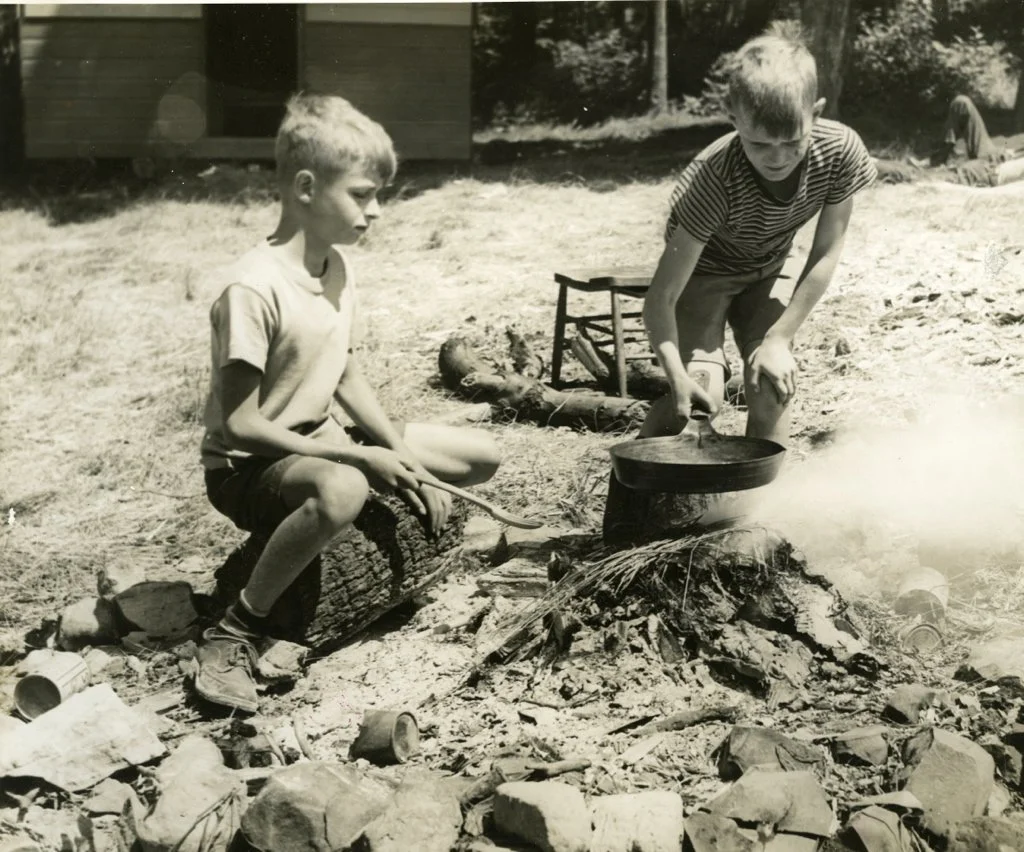
One of the activities that Big Chief Kagama introduced at the old camps was how to build a fire and cook food in the bush.
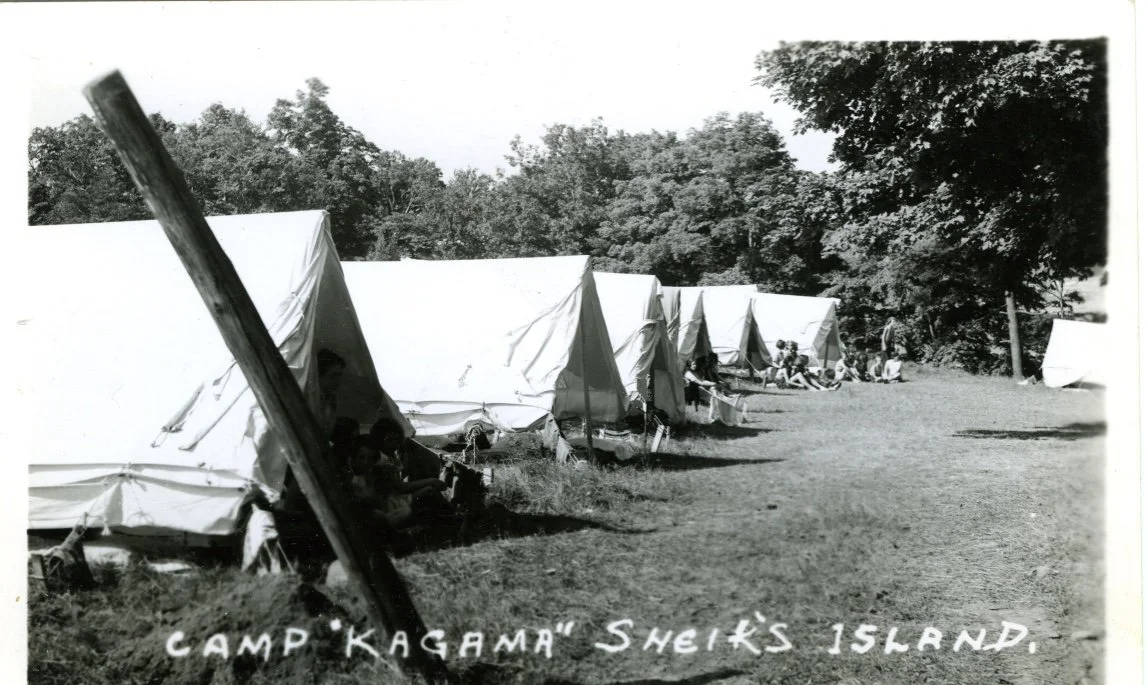
Everyone was housed in tents on Sheik's Island. Tents were made of Egyptian cotton and not water-proof.
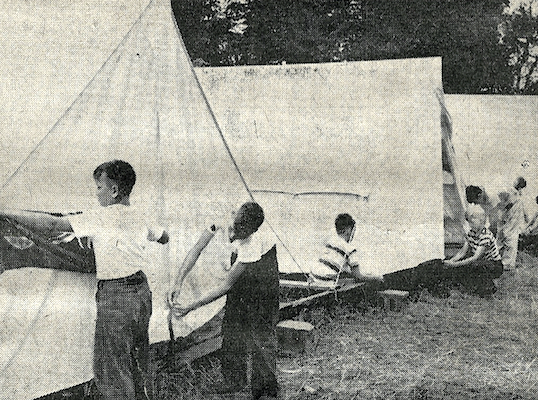
Campers were responsible for setting up the tents and maintaining the ropes and pegs. They were also responsible for trenching around the tent for water-run-off.
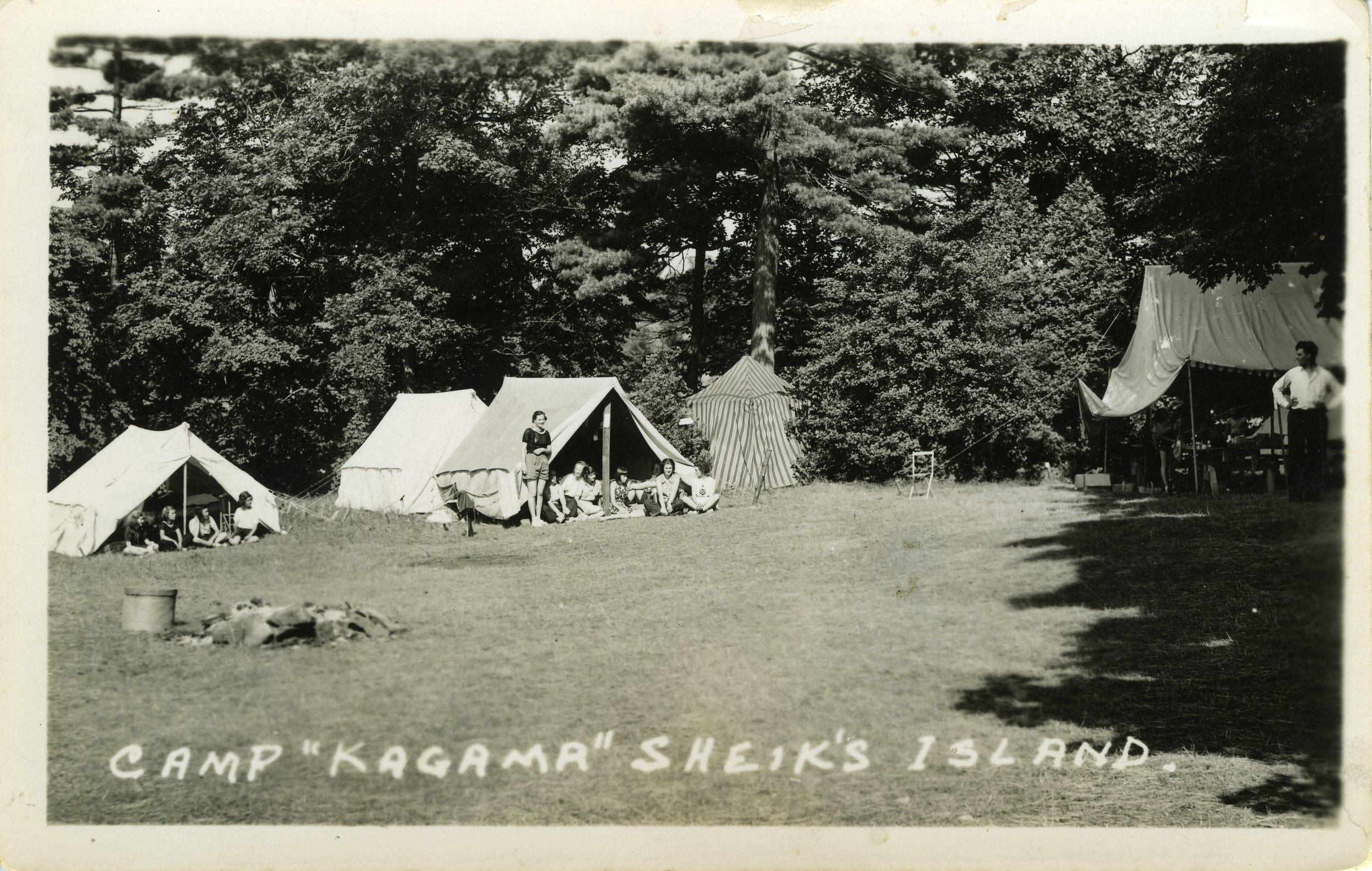
Tents were positioned like parentheses on either side of the central fire pit.
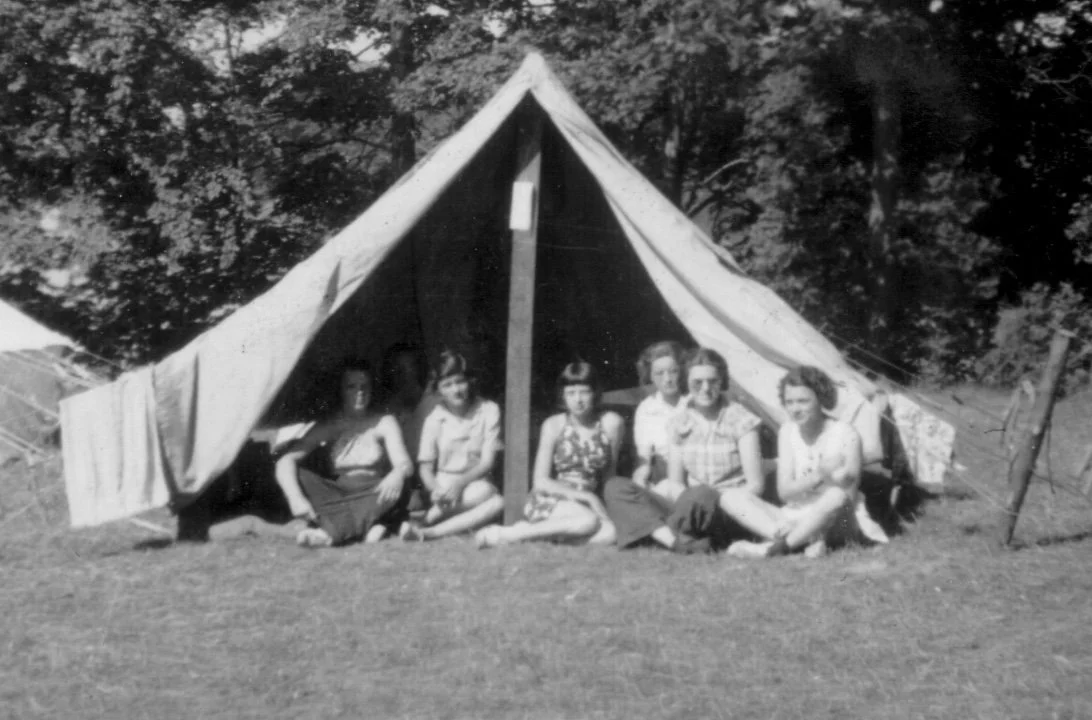
Girl campers sitting in front of their tent. The tents were placed right on the ground so campers had to supply some sort of ground sheet or place their ticks right on the ground. (Not a good idea!!)
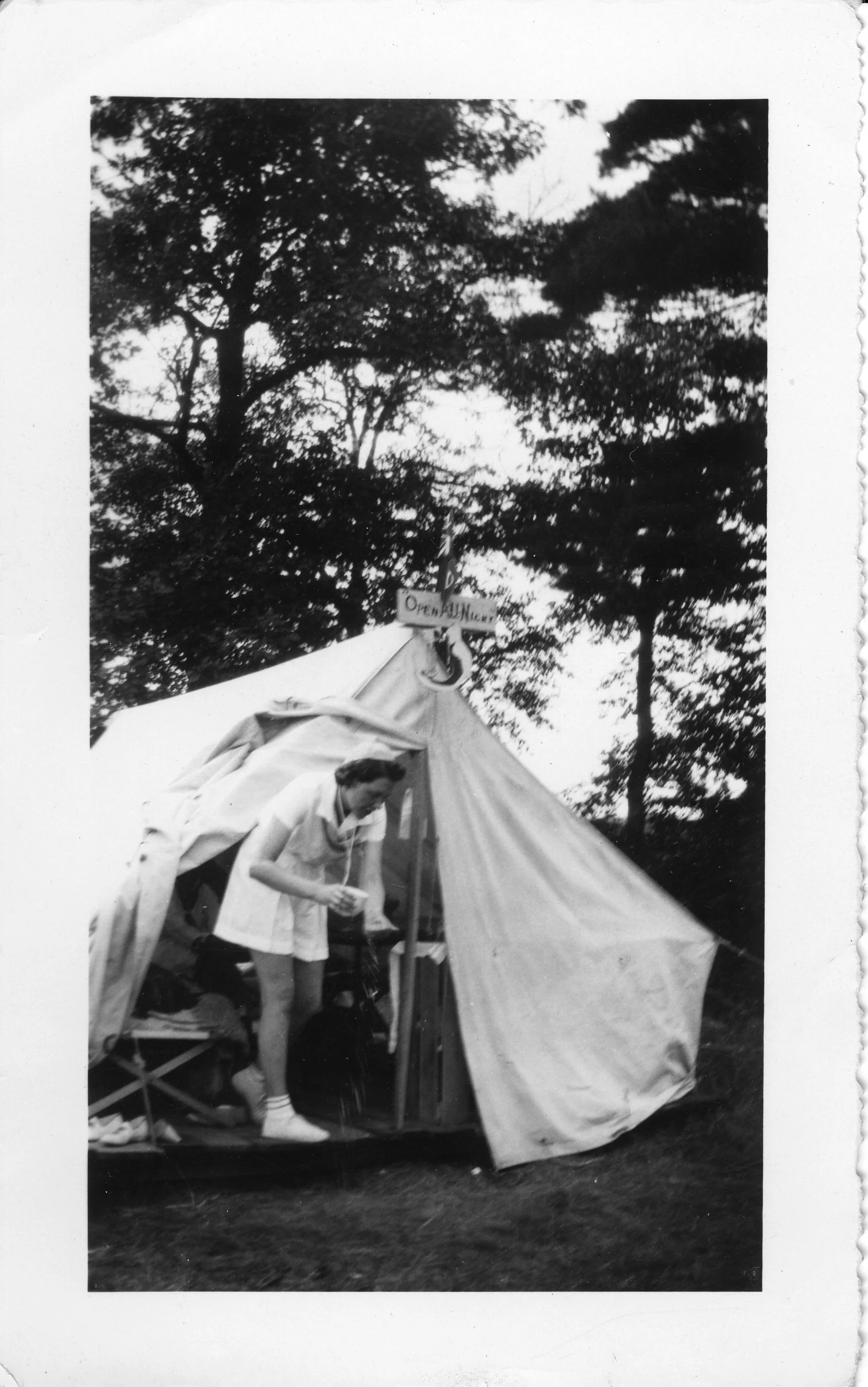
The infirmary tent on Sheik's Island. (The nurse in the photo was Jean Johnson)
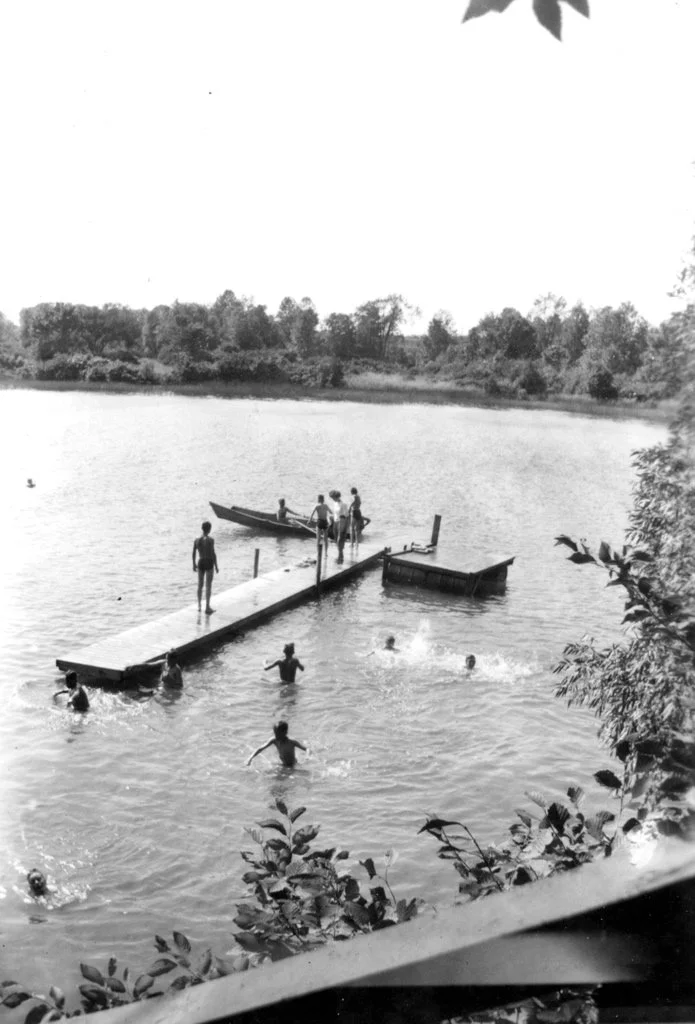
Taken from the top of the hill overlooking the swimming hole on Sheik's. The peg board for names of who was in the water was at the top of the hill ... then you went down the staircase to the water and the 'buddy system' was strictly enforced. The swimming hole was at the end of a sheltered bay. The Long Sault rapids were at the opening of the bay so canoeing and even rowing activities were not allowed.
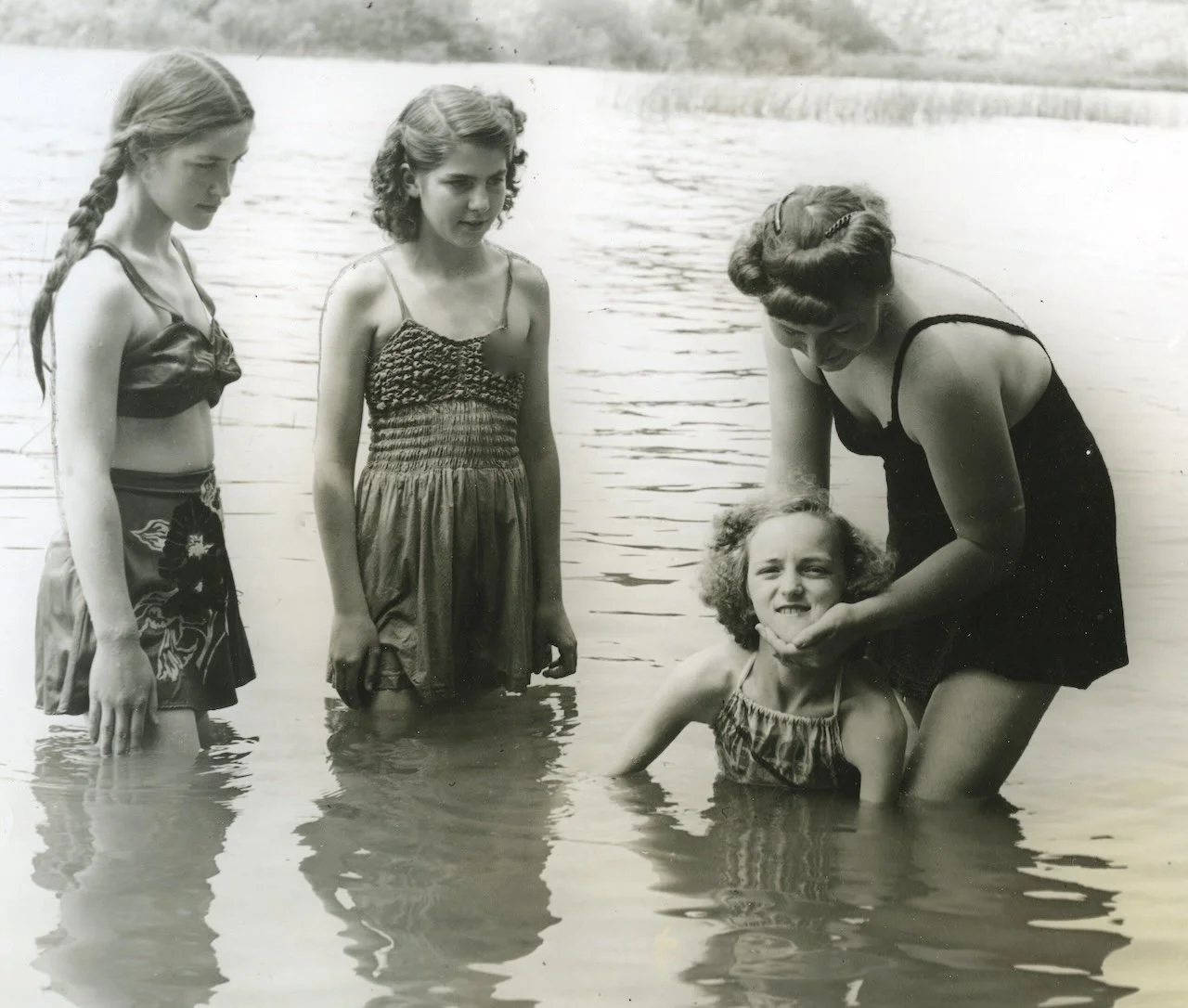
1940s Swim class at a girls' camp. Each camp had swim lessons from a qualified instructor as well as AR instruction.
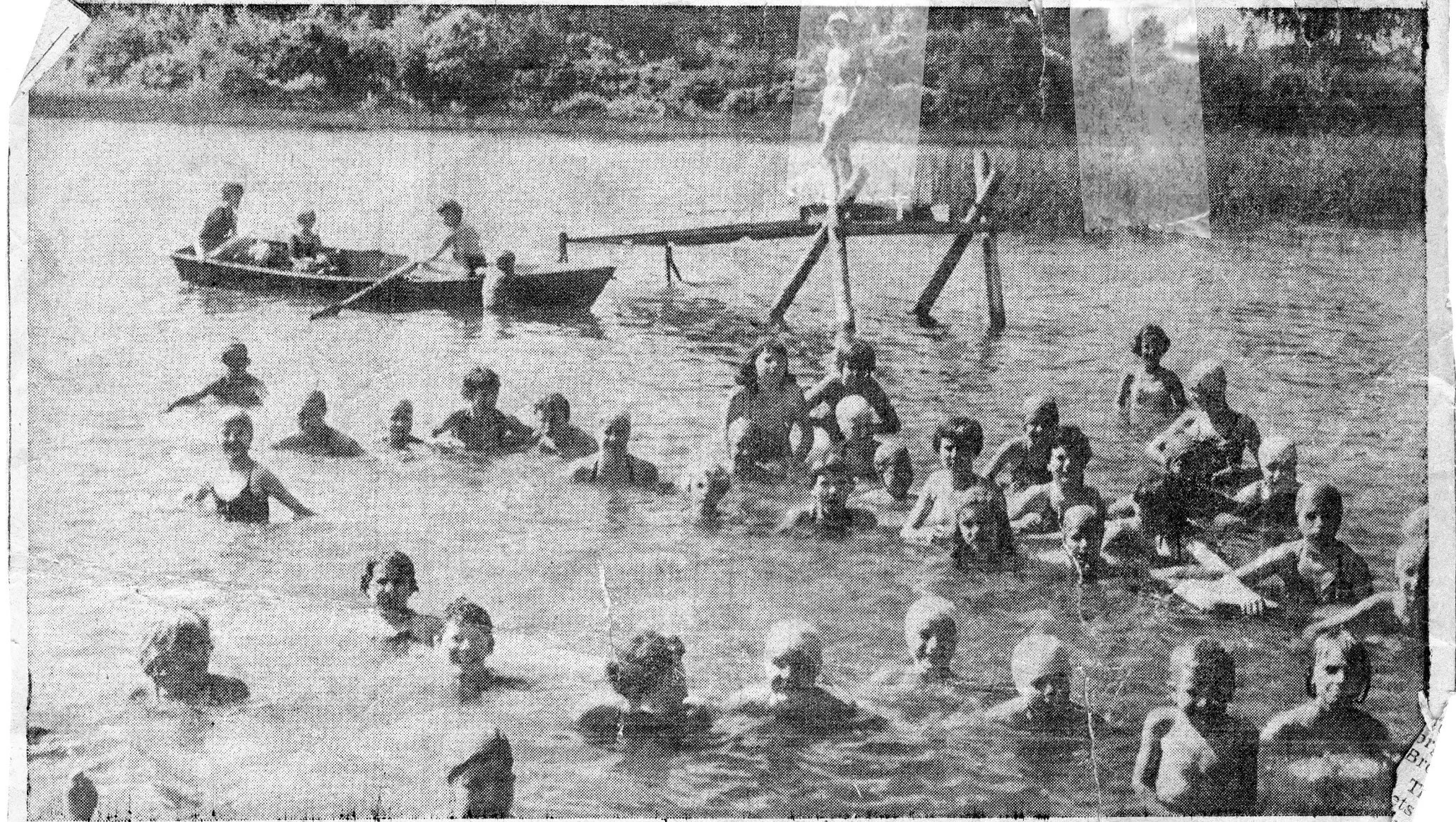
1950 shows a girls' camp. They had a row boat for emergencies and a dock.

Rev. Narcisse McLaren and camper named Joe. (We have been told this was one of his favourite campers that year).

Big Chief Kagama leading campers back through the forest from Vespers Point. (Look carefully and you can just make him out at the front of the line.)
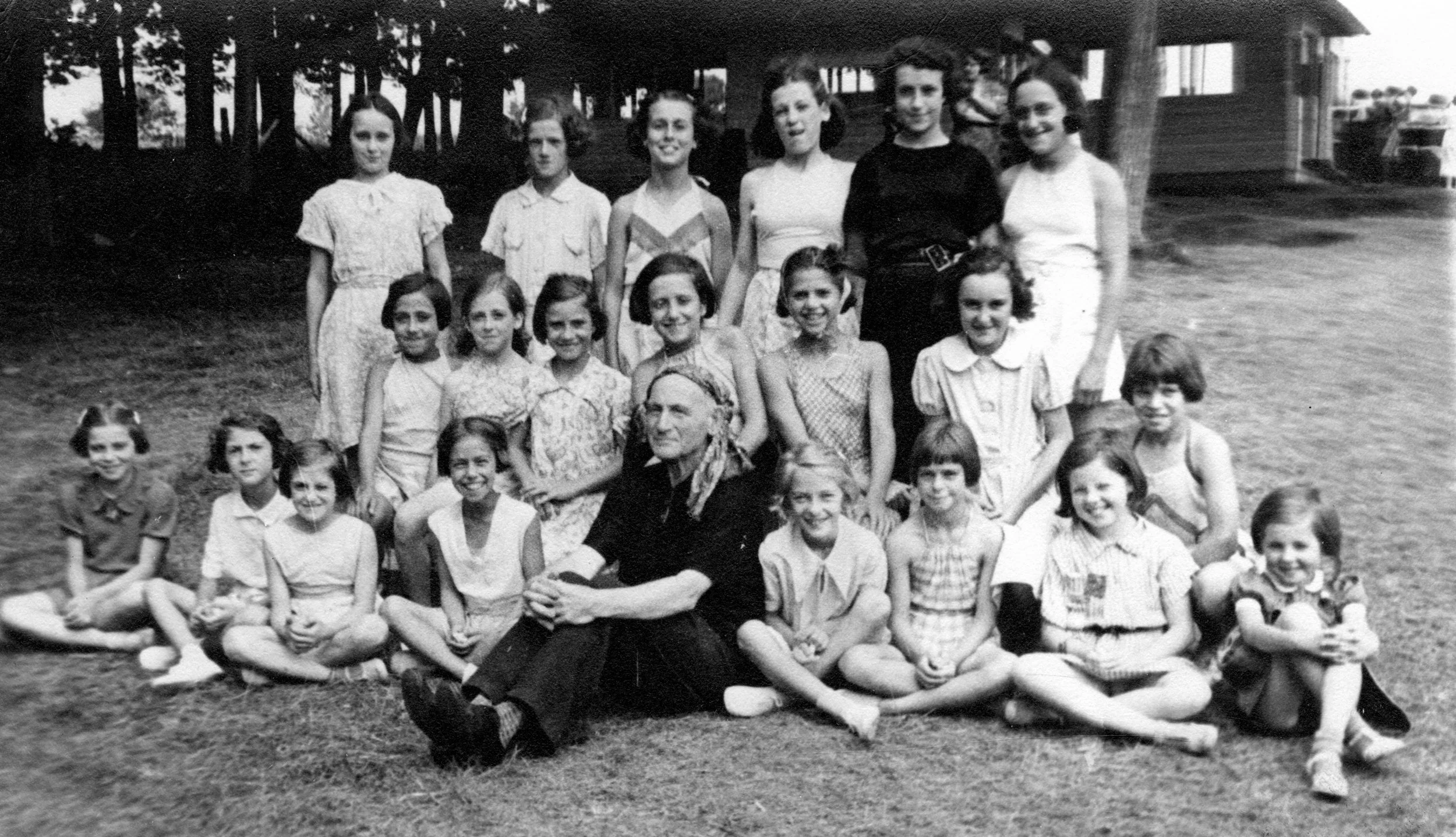
Rev. McLaren with CSS camp directed by Gertrude Hebert.
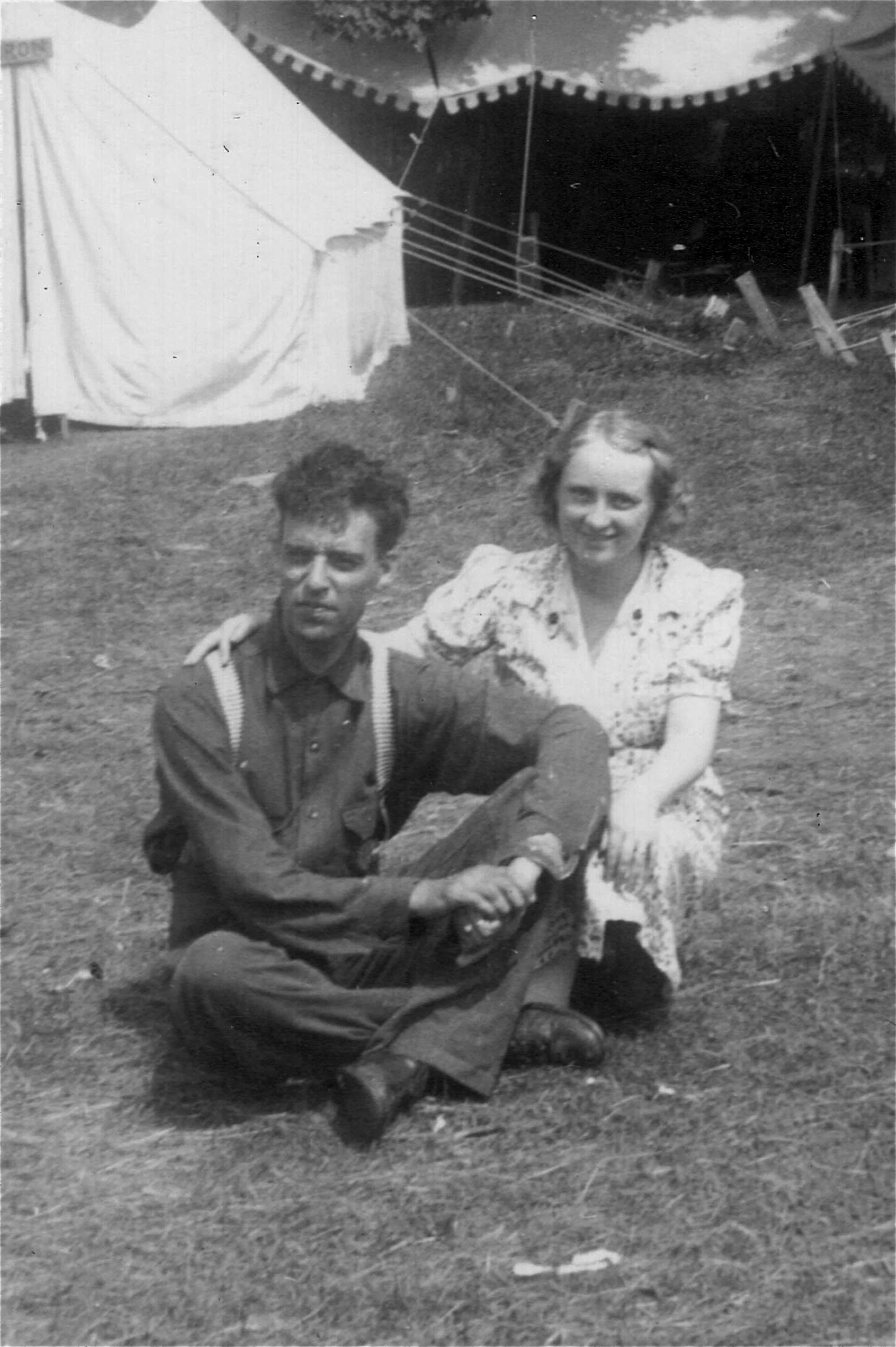
Rev. Charles Dawes (Uncle Charlie) and his wife Kathleen. Uncle Charlie did the music at all the camps and bought the groceries. Aunt Kath did bible studies at the girls' camps.

Rev. Clarence Ferguson, unknown, Rev. Percy Lambert. Almost all the camp Directors were United Church ministers in Eastern Ontario from the very beginning.
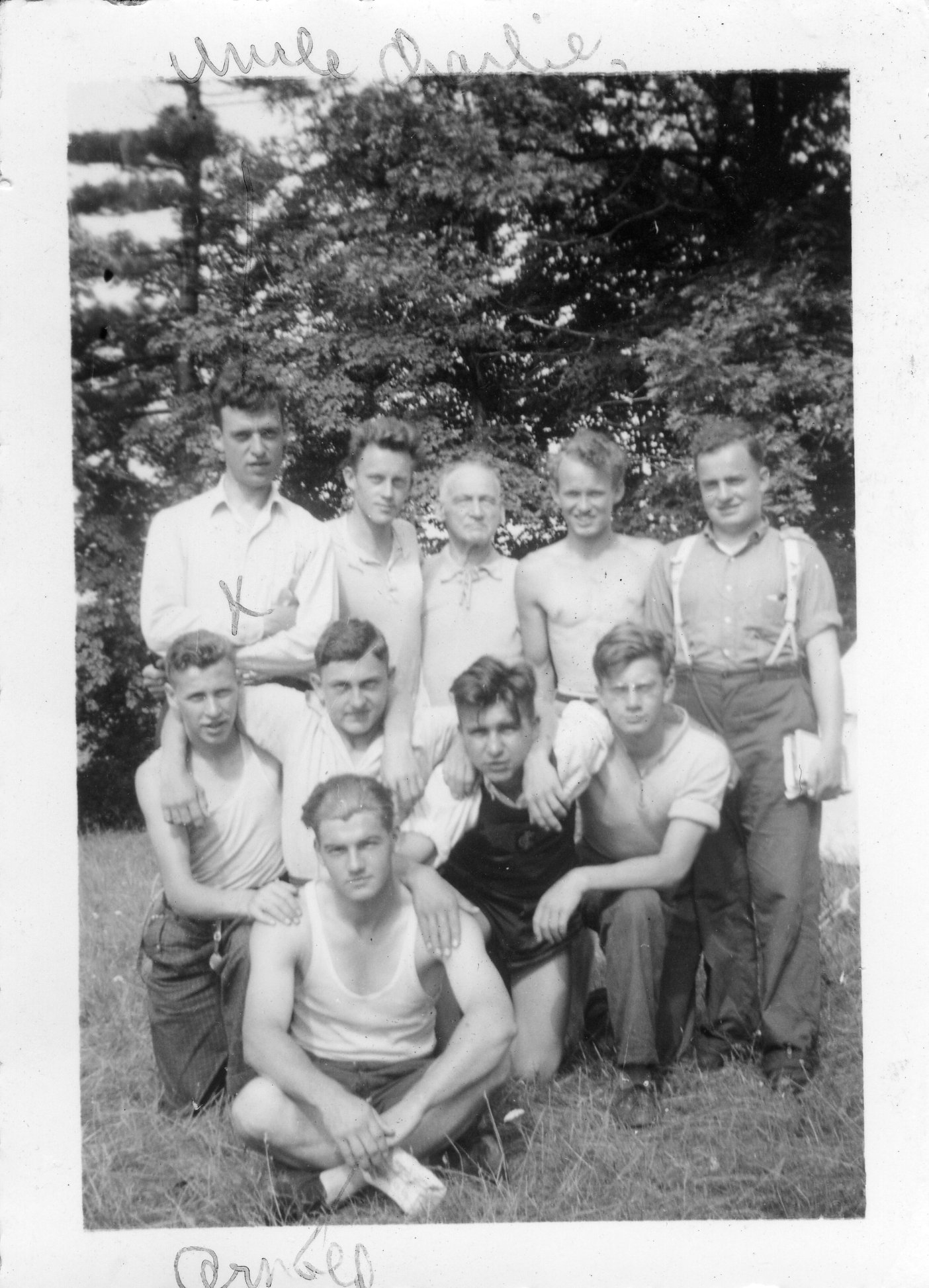
1940s boys' camp leaders. (in back row (L-R) Charles Dawes, Unknown, Rev. McLaren, Unknown, Percy Lambert. The remaining are also unknown.
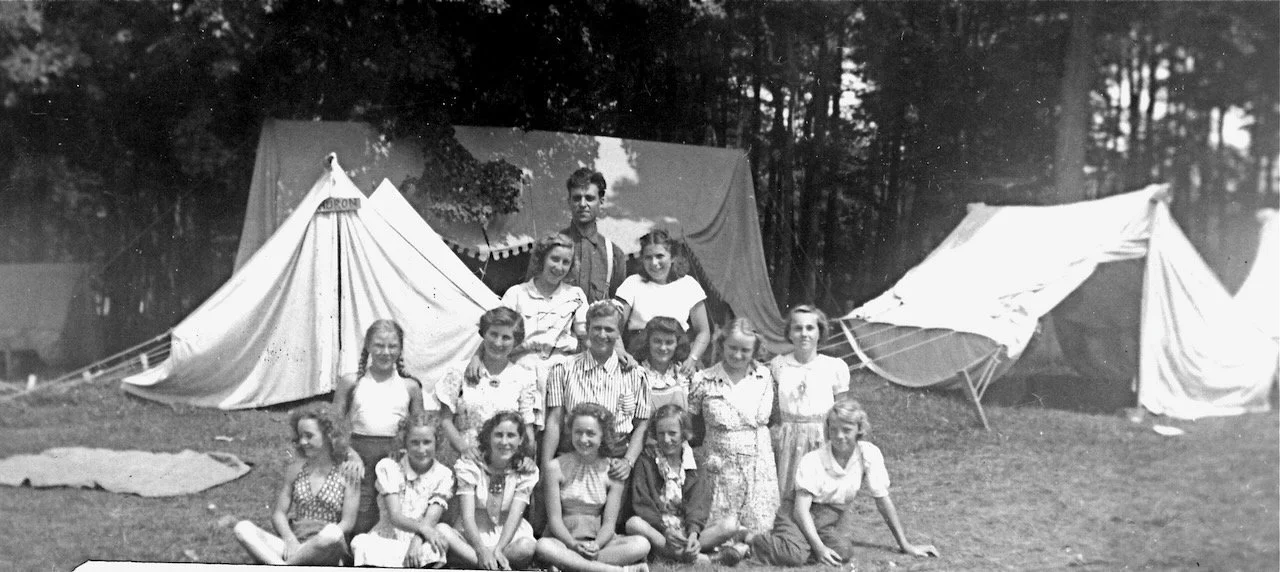
1940 girls' camp. Uncle Charlie is in the back row; Aunt Kath is kneeling in the second row; second from right.

Rev. Percy Lambert from Apple Hill and Rev. Clarence Ferguson. (one was so tall; the other so short)

Big Chief Kagama and first grandson Don who became Prince Kagama. (He came out to staff training for a few years to do the traditional camp songs with the counsellors. His camp name is Cousin Don. He also led the campfire singalong at the 80th celebration)
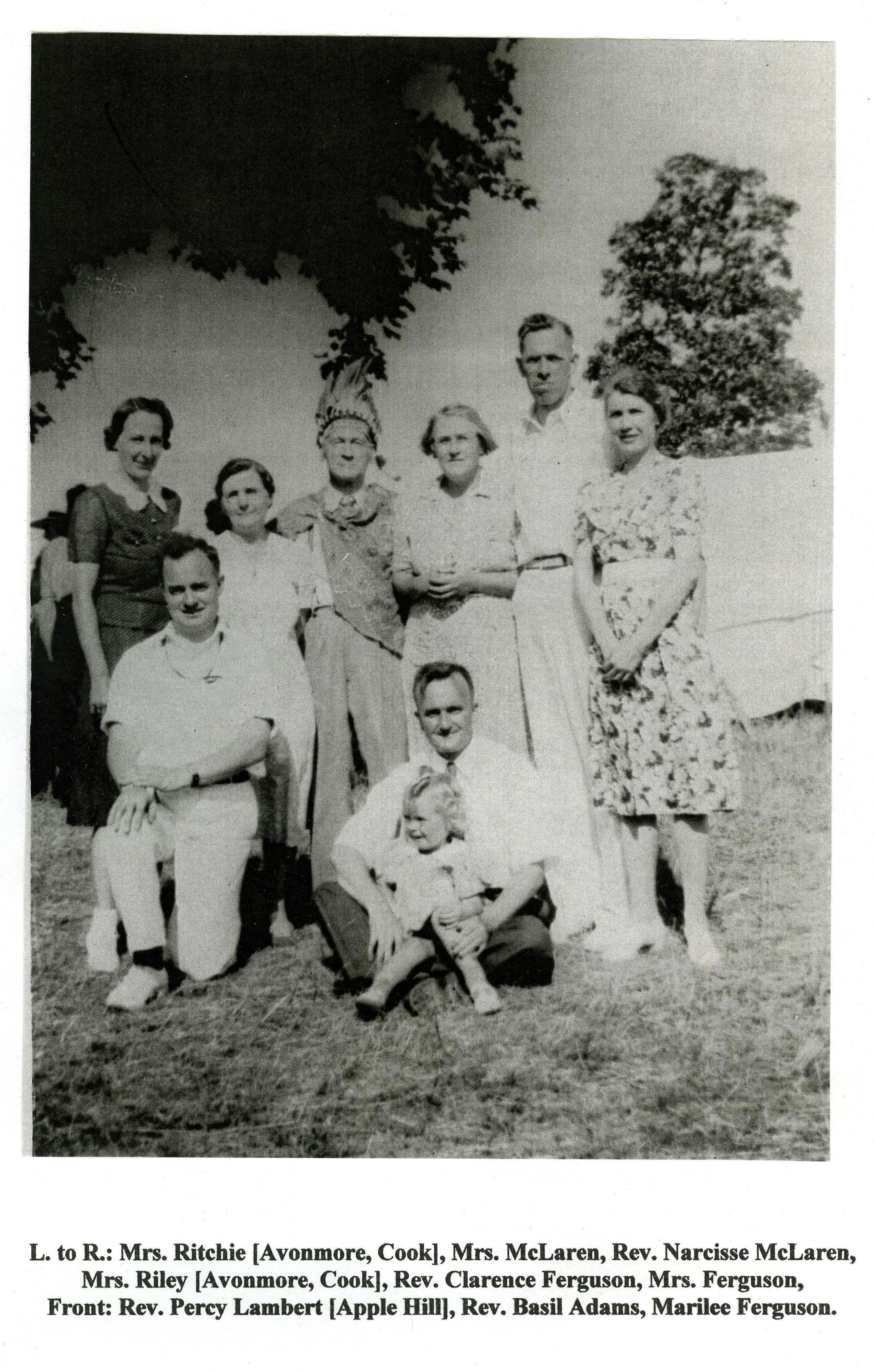
1940 Directors and staff. The photo is labelled but the names are not all correct. The lady identified as Mrs. McLaren is incorrect. (She was as tall as Narcisse and died in 1938).
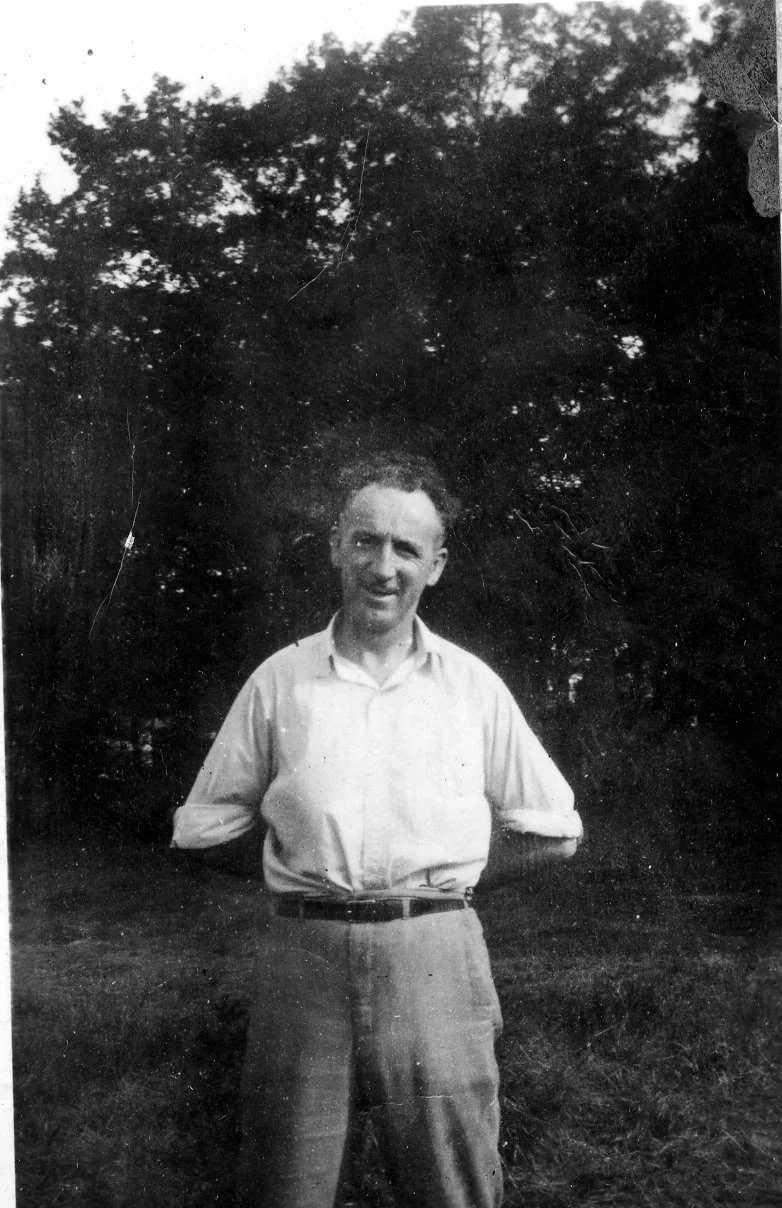
Donald McLaren. This is Narcisse's eldest son. He was in the RAF but came to camp to direct one boys' camp when he was on leave from the war.

This was a group of boys in front of their tent. The leader in the photo - centre at the back under the peak of the tent - is Marcel Beauchamp. He was Narcisse's nephew, the one who won the archery trophy when he was a camper. He was also one of those family members who was commandeered to help hammer nails when the dining hall was erected.
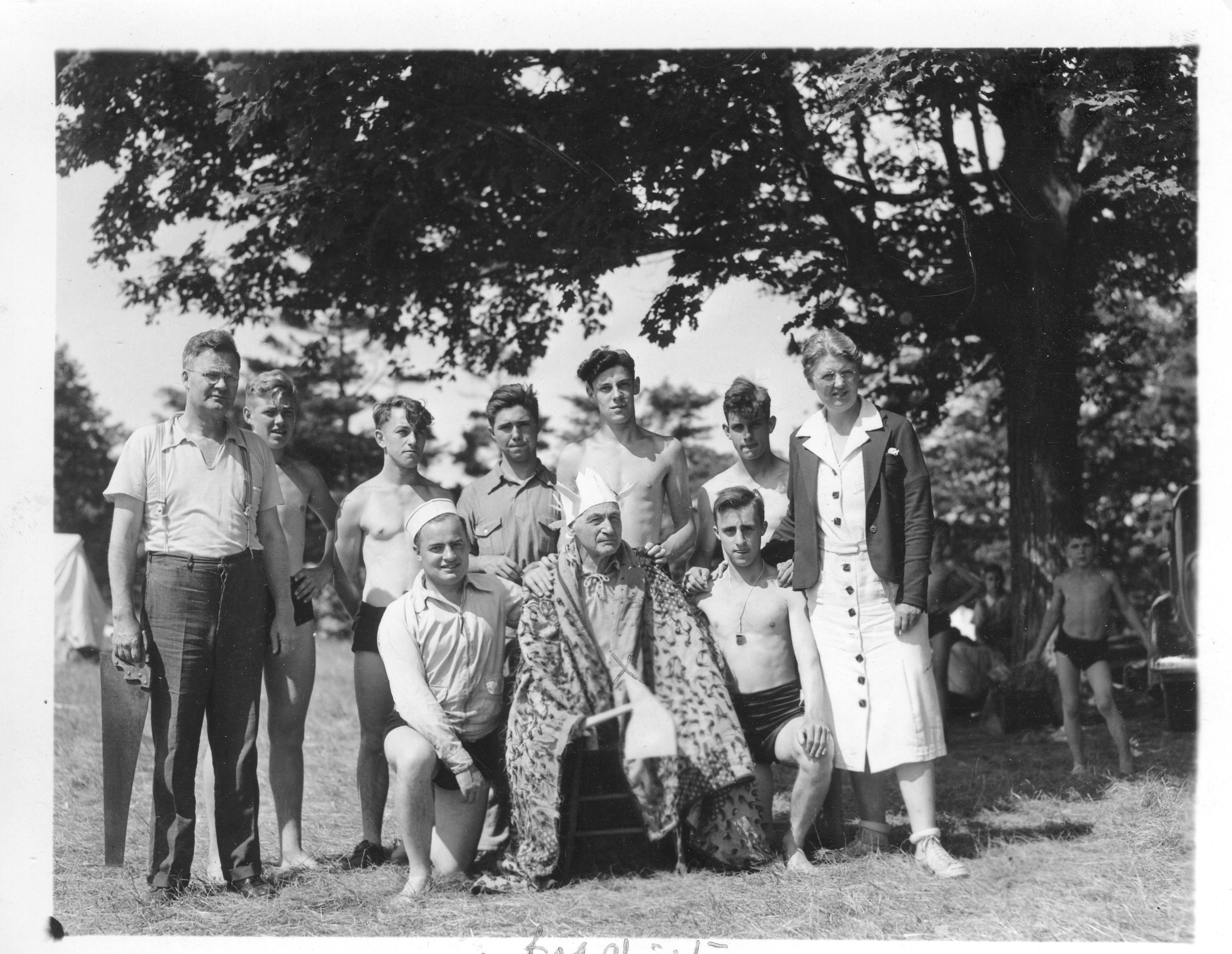
Some of the leaders at another early camp. Rev. Lambert is on the far left; Rev. McLaren in the middle in the front row and the lady was the cook (possibly Mrs. Riley).
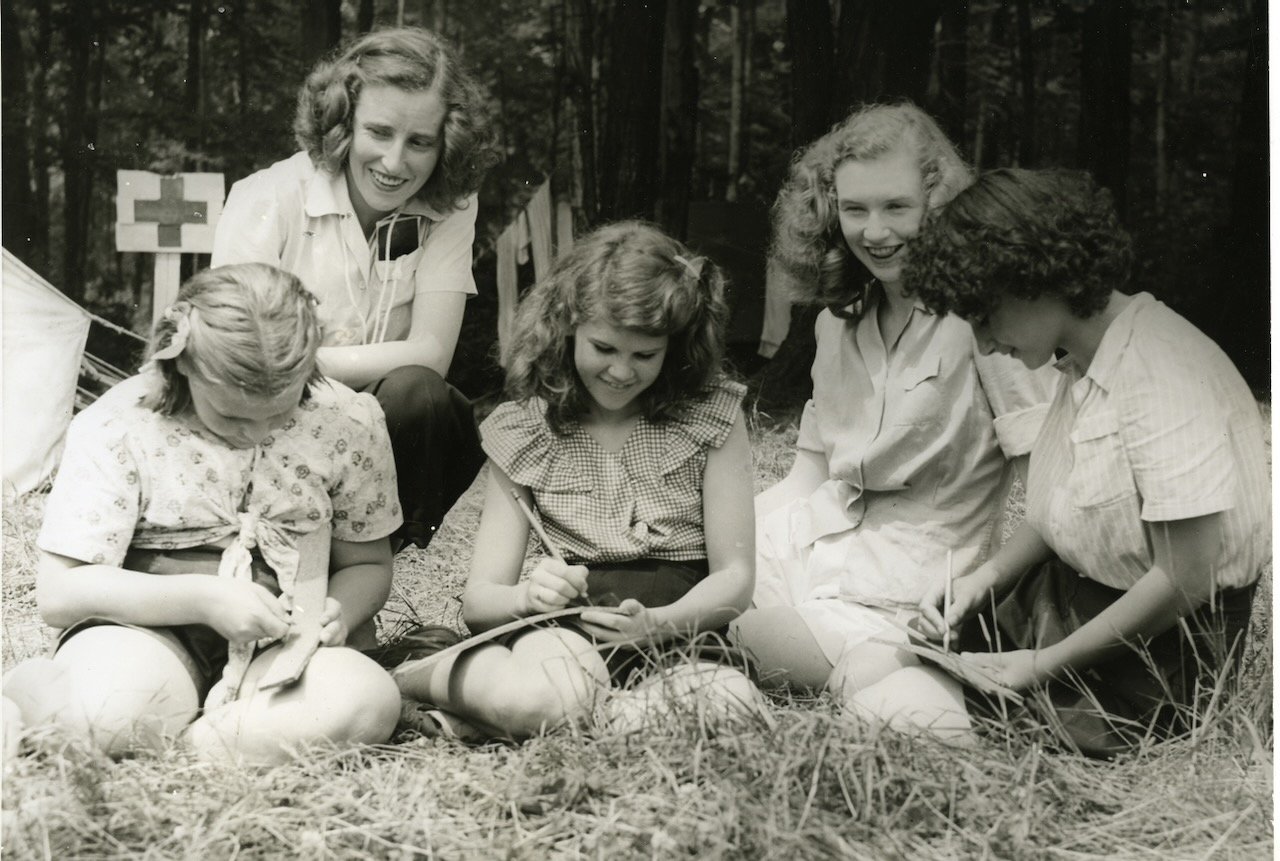
Girls' camp activities. (circa 1940-50)
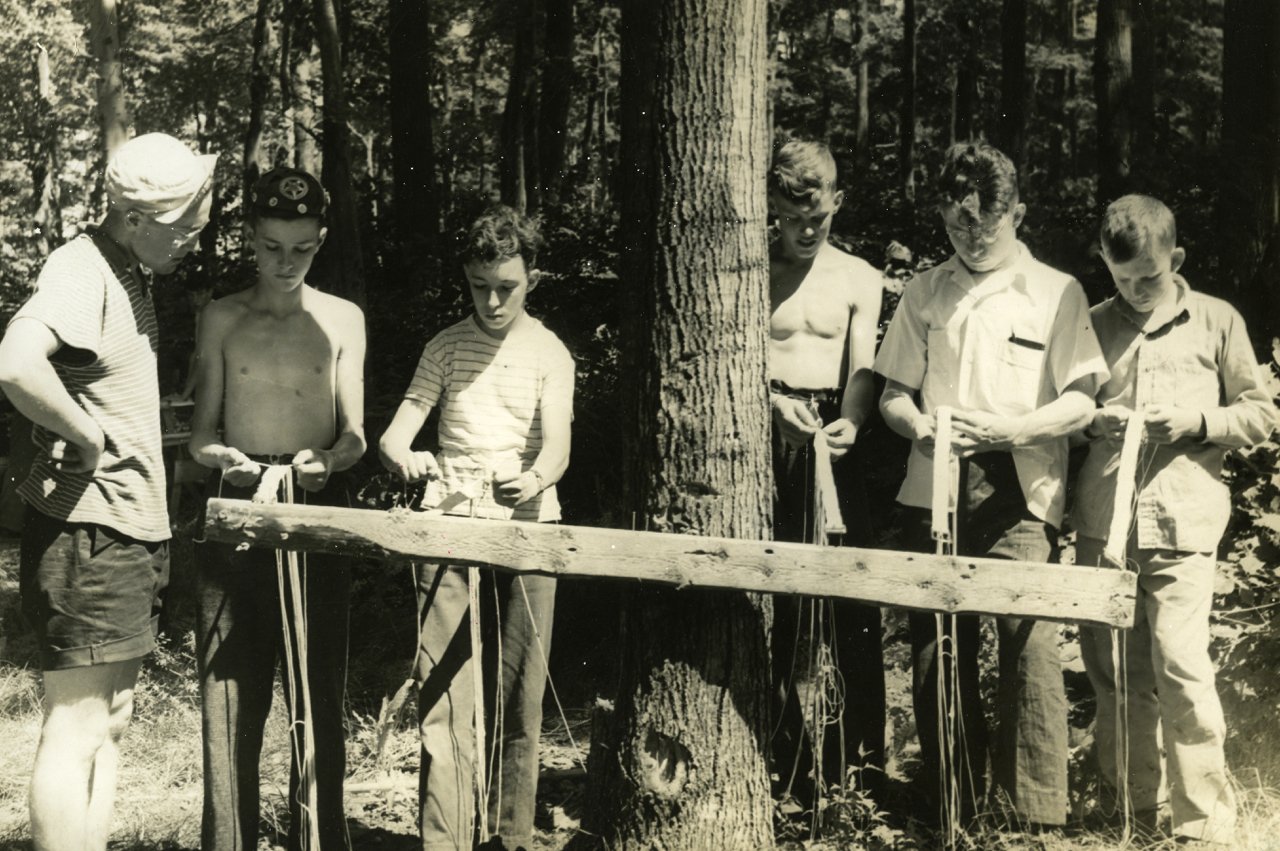
One of the activities at boys' camp was belt weaving. The weaving pattern was so complicated that it would take working on it every day for the full camp to complete. The Counsellor at the far left is Wayne Poapst. The smallish lad in the centre was a camper named Jean Pierre de la Castasse.

1945 - Prince Kagama at the fire pit.

Three campers at Sheik's. Left is Ellen McLaren (Karen's Mom); Mae Riley, and Carmen Beauchamp who is another niece of Narcisse's. (Carmen, Marcel and Madeleine are siblings and they all came to the 65th and the 75th celebrations. Only Marcel (at 82) was able to come to the 80th.

There were all sorts of fun plays and activities at camps. These two are Marcel and Birkoff's father.
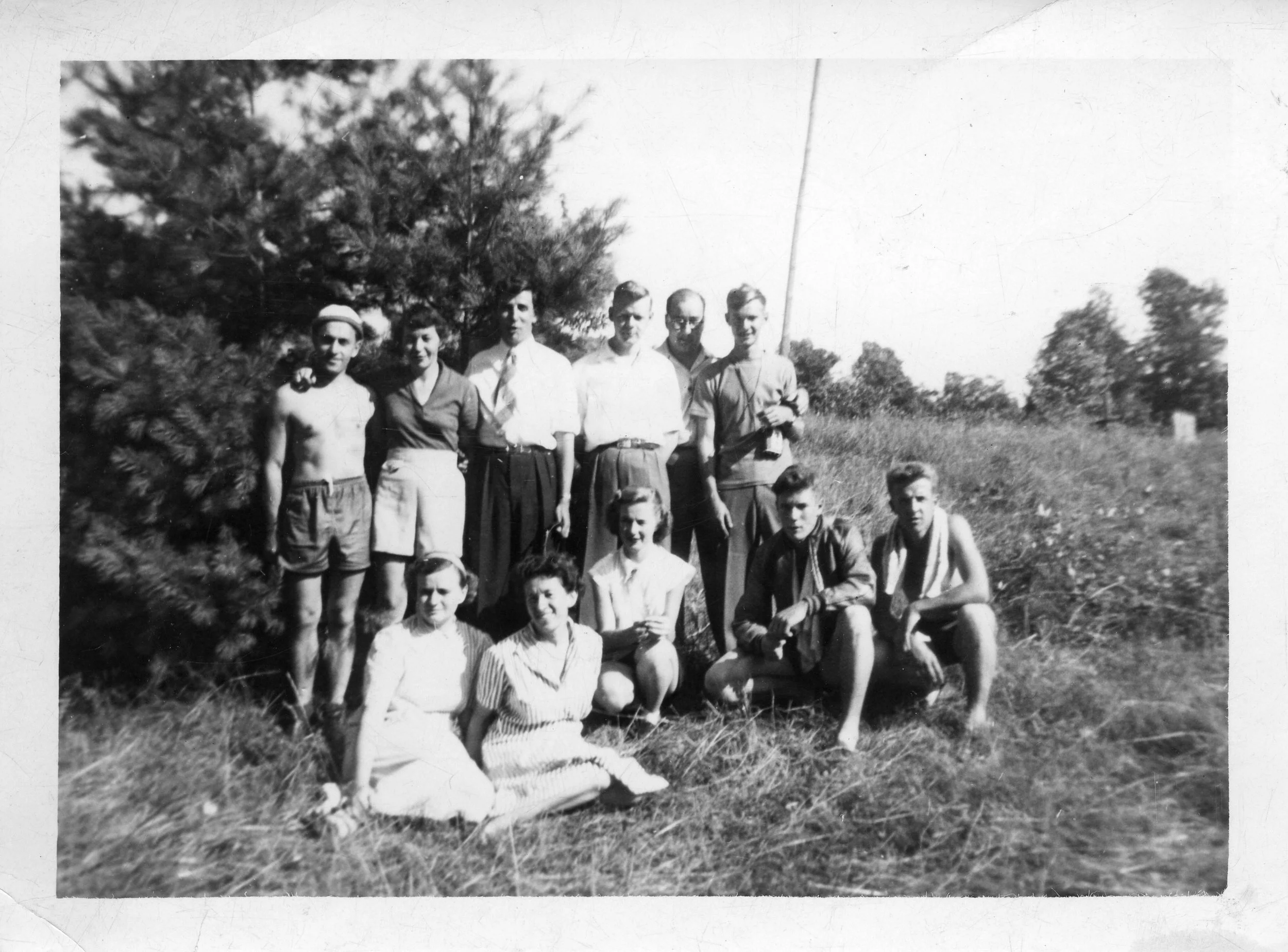
These are some of the leaders in the 40 - 50s. (Back row: L-R: Marcel Beauchamp, Unknown, Unknown, George Hickey; Sammy Lefebvre, Unknown. In the front row, the two ladies from the left are Maxine Gow and Marjorie Heagle. (Marjorie continued at Morrison Isl. as a cook. Her husband Floyd and then her son, Bob, looked after all our plumbing needs pro bono).
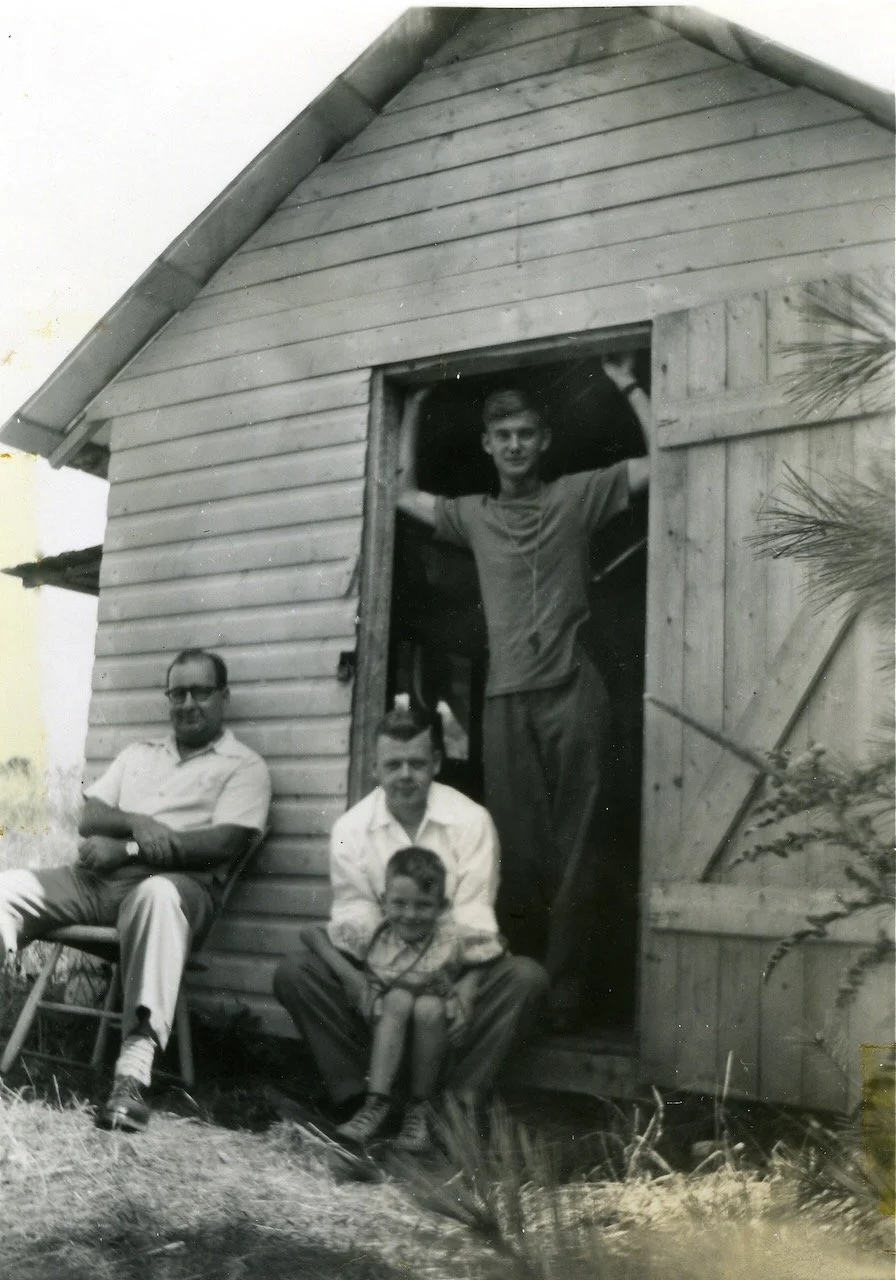
Leaders at the same camp shown in photo 22. Sammy at left; George Hickey with my older brother Neil in front. The other lad is unknown.
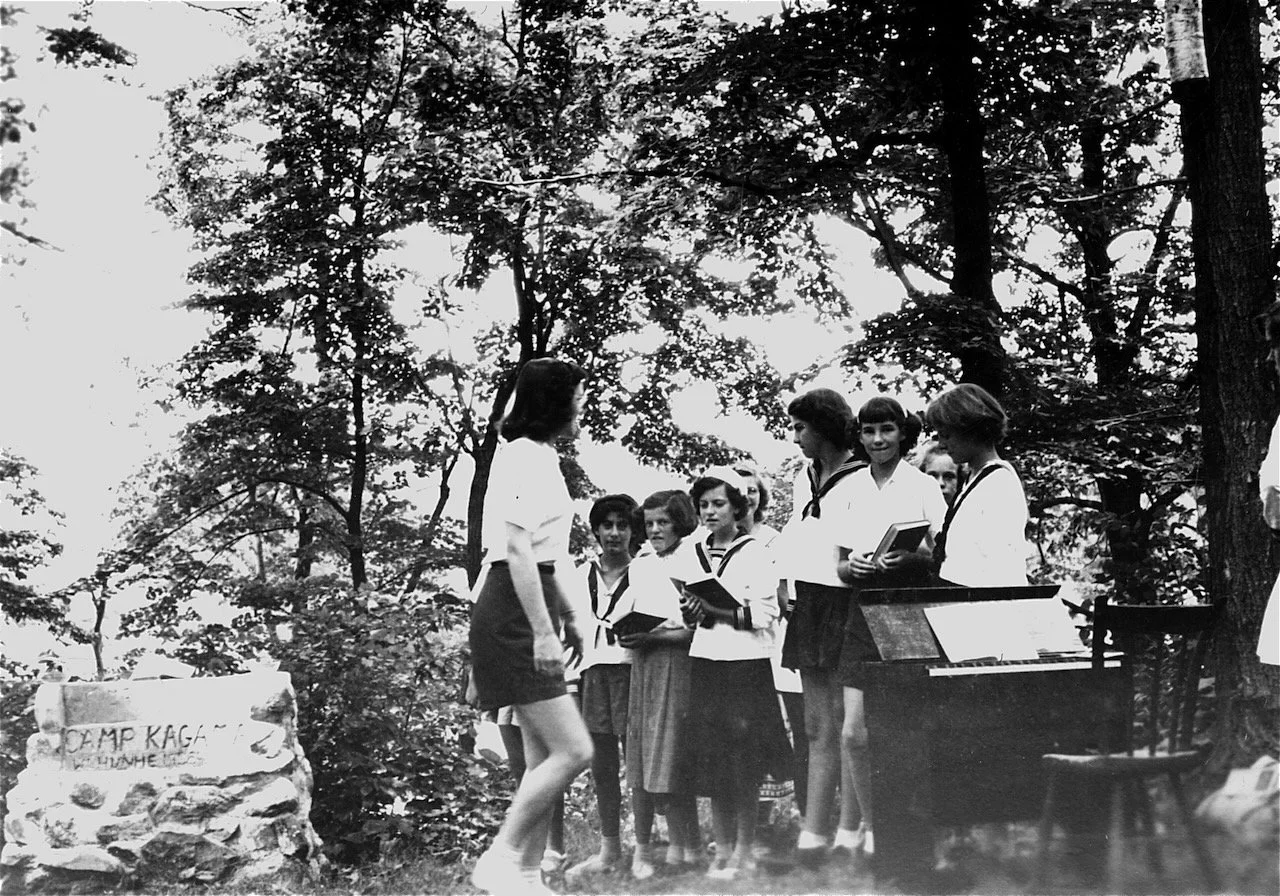
Vesper Point at Sheik's Island. You can see the original altar and the prairie organ used for music. The camper second form the right behind the organ with a book in her hands, is Joan (MacLeod) McEwan.
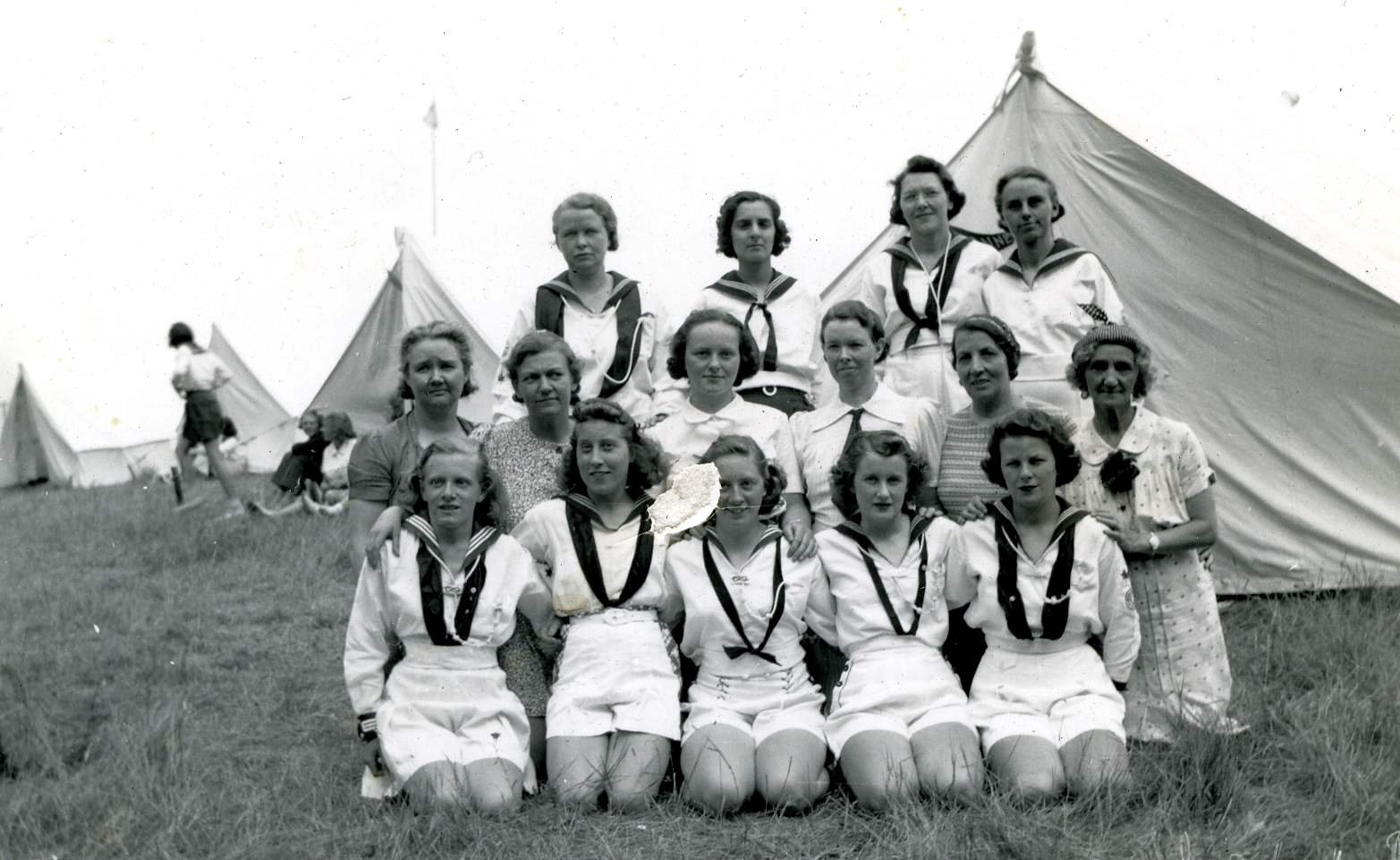
1939, CGIT Campers
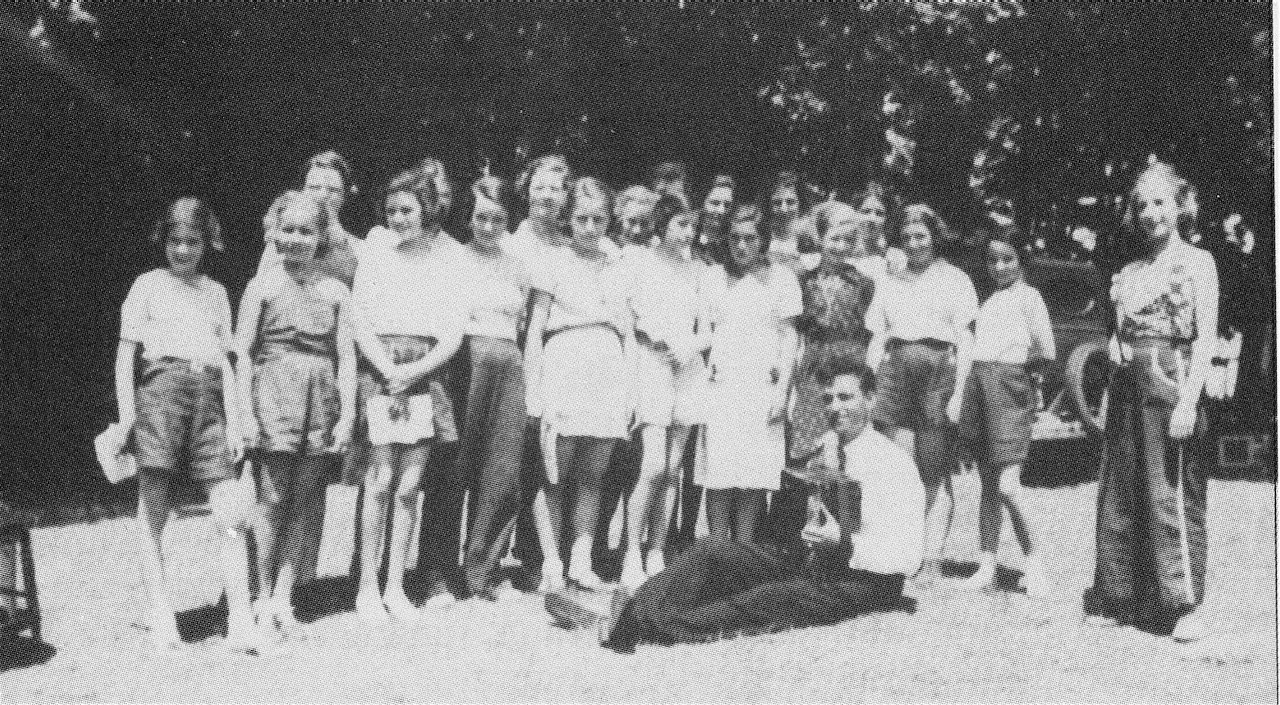
1939, all girls camp. Uncle Charlie is pictured with his accordian.
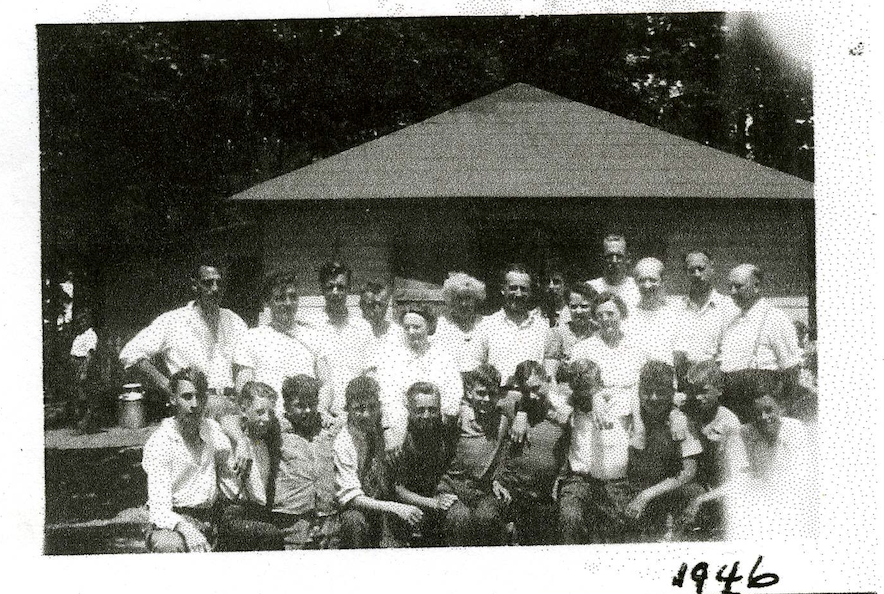
1946, all boys camp.
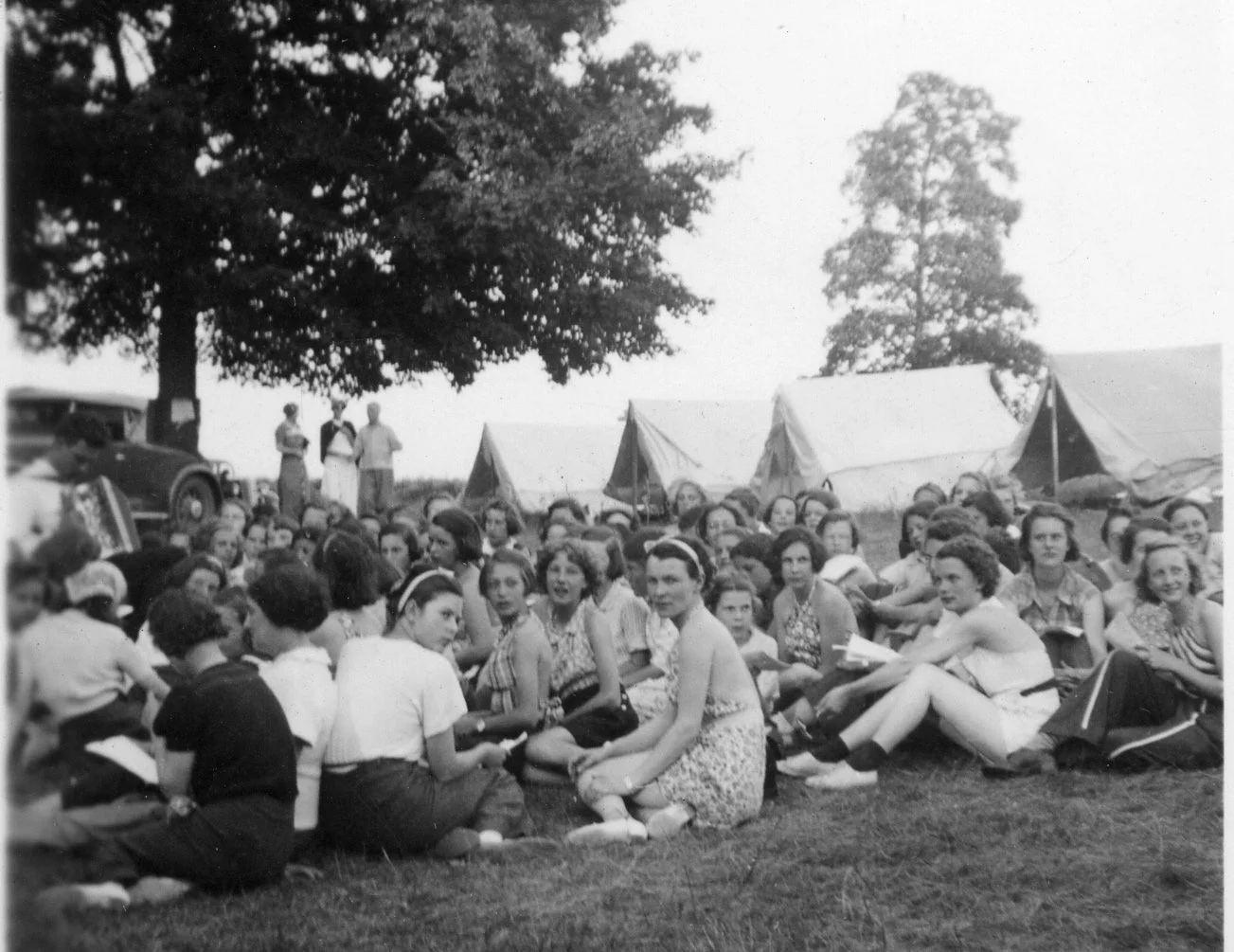
1938, Girls singing on Sheik's Island.
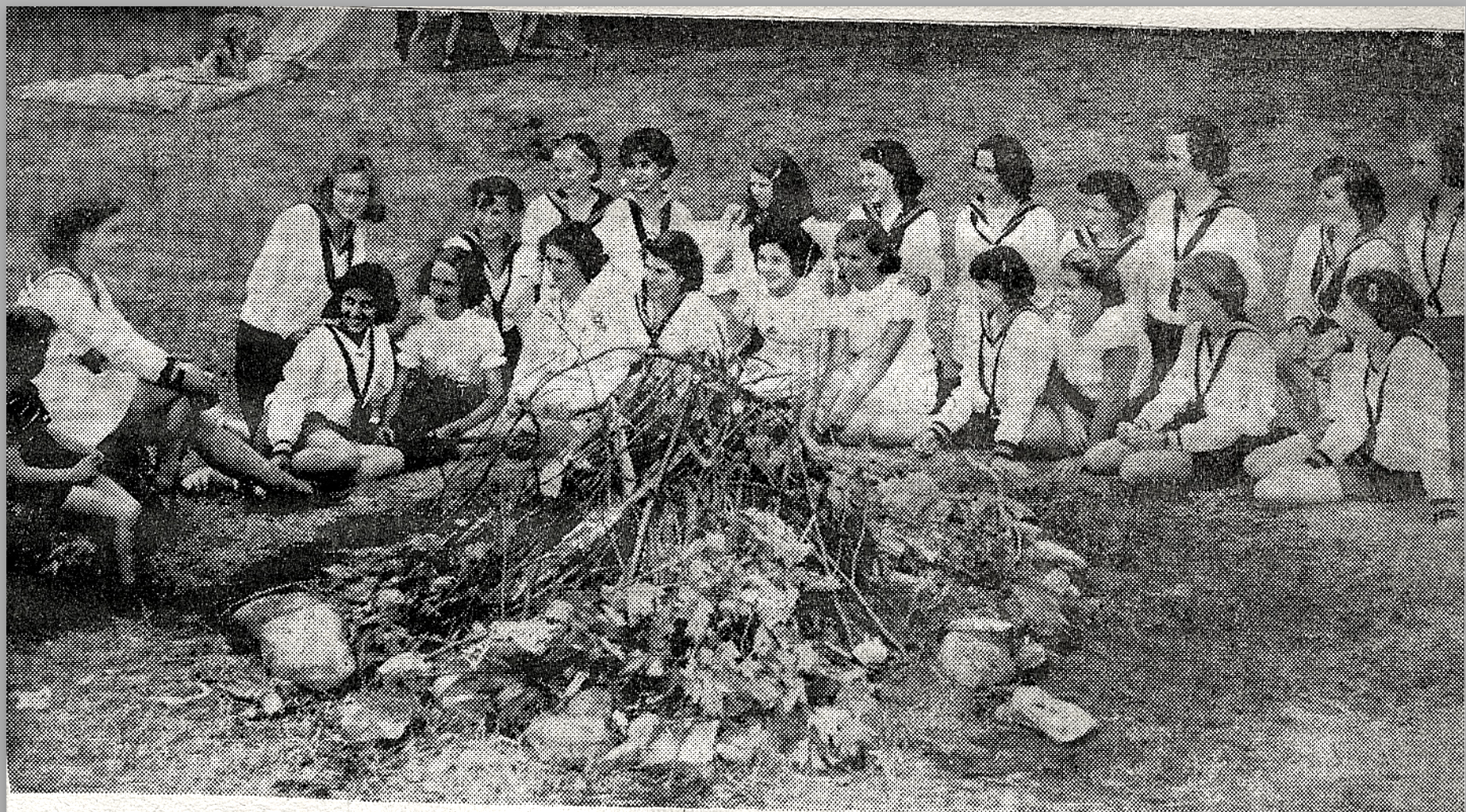
1949 CGIT Camp (taken from local news)
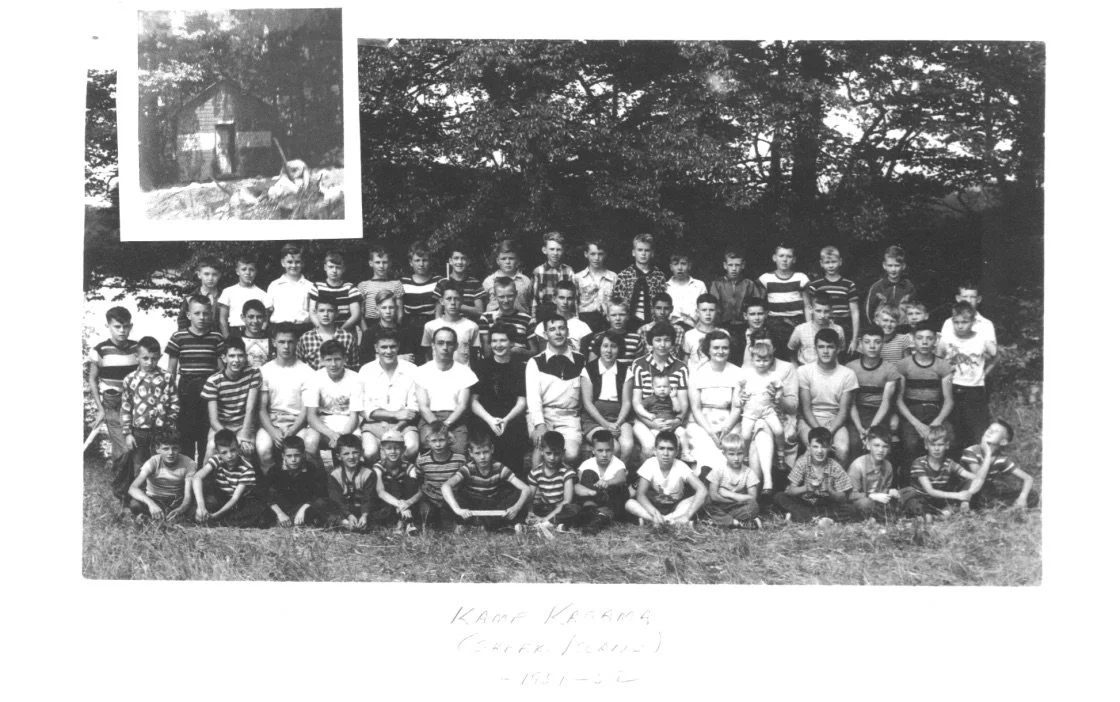
1951, All boys camp.
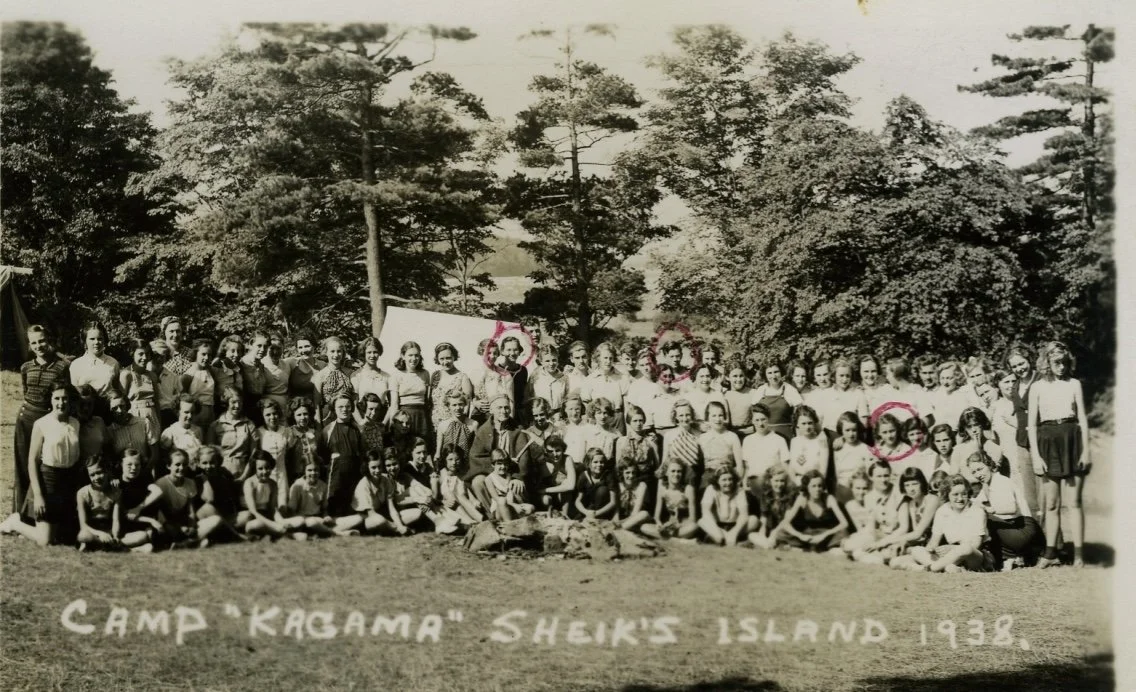
1938, All girls camp.